Lamborghini Murciélago LP640 Aerodynamic Analysis
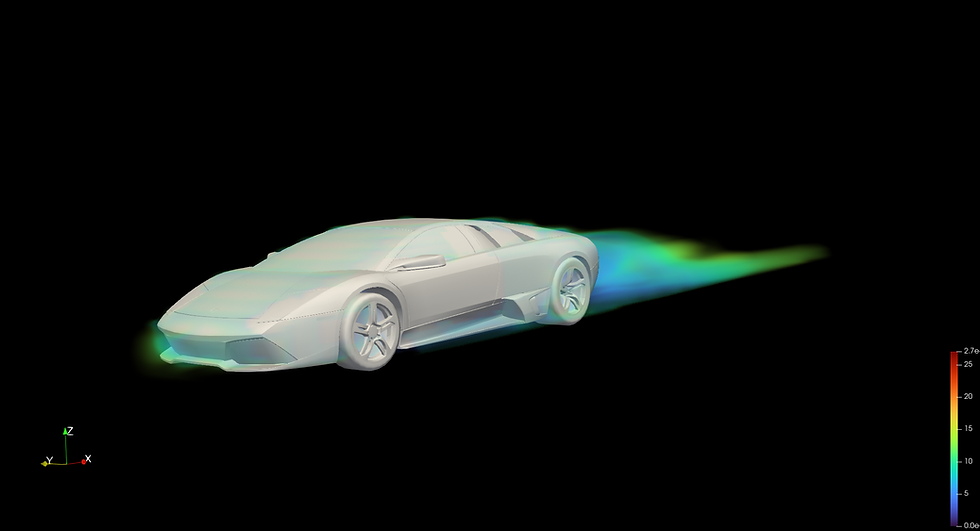
This project focused on the aerodynamic performance of the Lamborghini Murciélago LP640 using detailed CFD airflow simulations. Although the Murciélago is primarily known for its naturally aspirated V12 engine and aggressive styling, the analysis revealed that the vehicle also features surprisingly advanced aerodynamic solutions.
The study examined airflow behavior across the entire vehicle, including pressure distribution, flow separation, cooling efficiency, and wake generation. The front section demonstrated effective radiator cooling thanks to strategically positioned air intakes, while the automatic suspension lowering system improved underbody airflow and increased front downforce by accelerating airflow beneath the chassis.
One of the key findings was the highly stable airflow attachment over the roof and rear section of the vehicle, which contributed to strong high-speed stability and a relatively small aerodynamic wake. The rear diffuser and active “bat wing” cooling inlets also played an important role in balancing cooling efficiency and drag reduction.
The simulations additionally identified several aerodynamic weaknesses, including drag generated by the side mirrors and lift created around the hood area. Despite these limitations, the Murciélago achieved strong aerodynamic performance, recording a simulated drag coefficient of approximately 0.30.
This project demonstrated how Lamborghini combined aggressive design, active aerodynamic systems, and efficient airflow management to create a high-performance supercar with surprisingly refined aerodynamics.