Polaris RZR Pro R 2026 Dakar
This project focused on aerodynamic analysis and airflow optimization for the Polaris RZR Pro R 2026, a vehicle being prepared for participation in the 2027 Dakar Rally. Dakar is considered one of the toughest off-road racing events in the world, where vehicles must survive extreme terrain, high temperatures, dust, and long-distance endurance stages. In these conditions, reliability, cooling efficiency, and vehicle stability become just as important as raw performance.
Unlike circuit racing vehicles, off-road cars are generally highly unaerodynamic due to their large suspension travel, exposed wheels, aggressive tires, and high ground clearance. However, despite these limitations, there is still significant room for aerodynamic improvements that can positively influence airflow management, cooling performance, and high-speed stability.
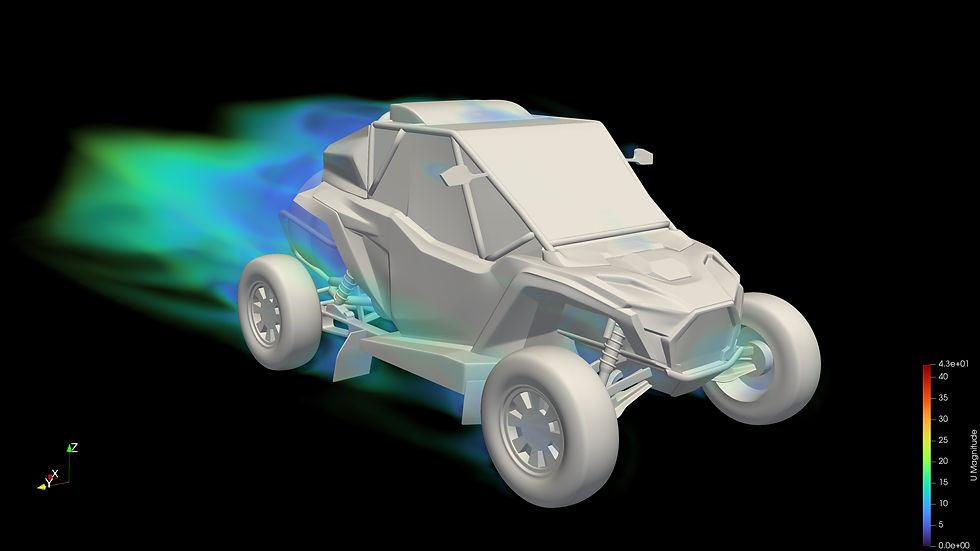
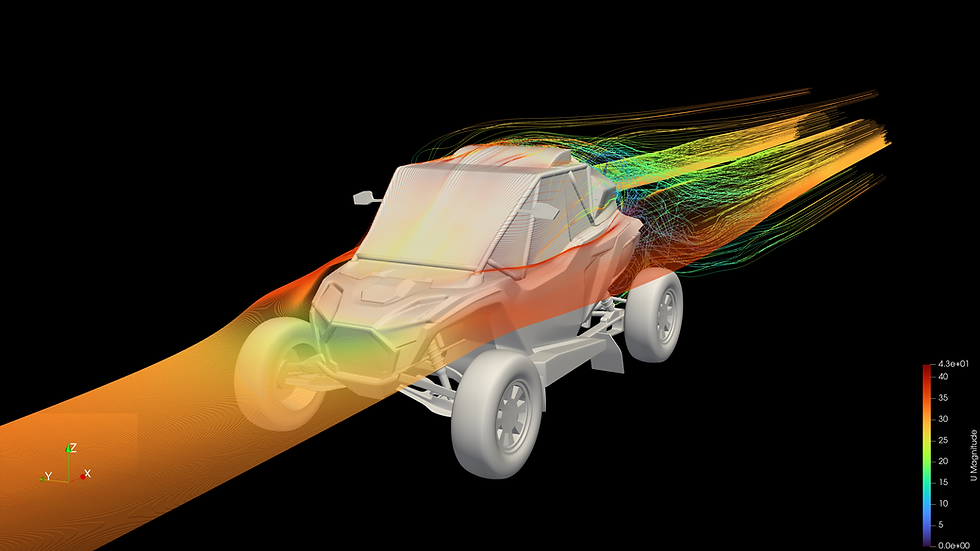
One of the main areas analyzed during this project involved dirt deflectors and their influence on airflow around the vehicle. These components play an important role in redirecting dust, debris, and turbulent airflow away from critical areas while also helping stabilize airflow along the bodywork during high-speed desert driving.
Additional attention was given to the side mirrors, which are commonly a major source of aerodynamic drag and turbulence in off-road vehicles. Through CFD airflow analysis, different mirror configurations and airflow behaviors were evaluated to reduce wake generation and improve overall aerodynamic efficiency.
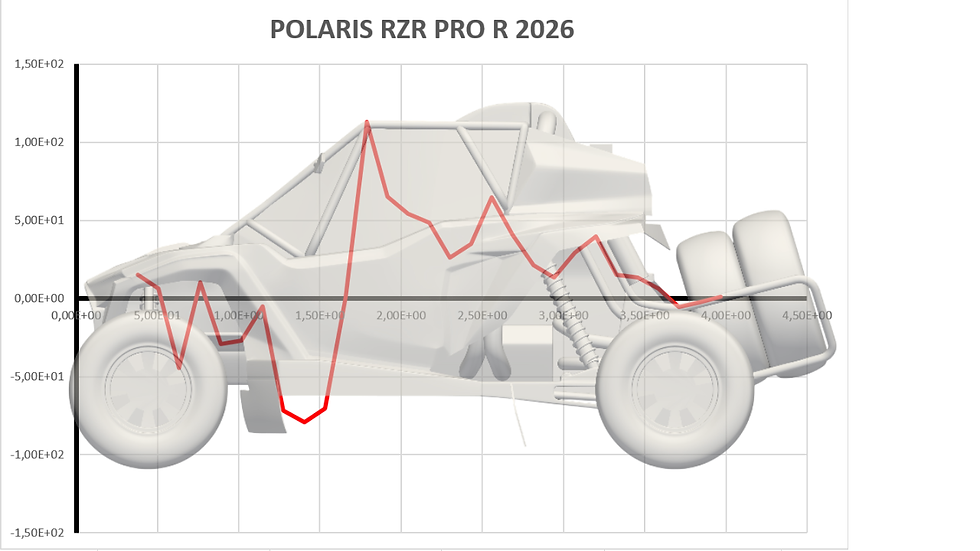
The project demonstrated that even in extreme off-road applications such as Dakar Rally racing, careful aerodynamic development can contribute to improved airflow control, reduced drag, better cooling performance, and increased vehicle stability in demanding environments.