Porsche 911 992 Aerodynamic Analysis
The Porsche 911 992 may appear visually simple, but its aerodynamic design is exceptionally refined. This project focused on analyzing the vehicle’s airflow behavior, cooling efficiency, drag characteristics, and stability using detailed CFD simulations.
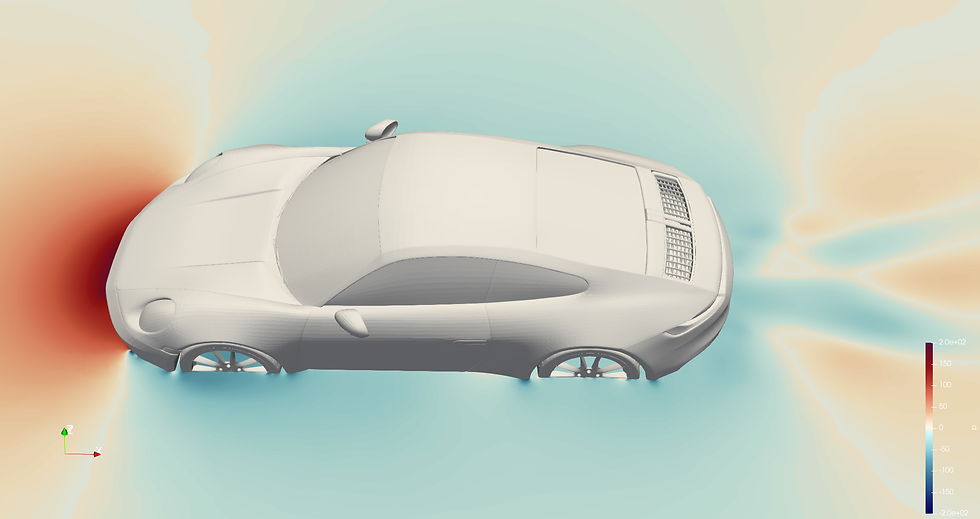
The study revealed that Porsche strategically positioned the front cooling inlets in high-pressure regions to maximize cooling performance while minimizing drag. Active aerodynamic elements, including adjustable cooling curtains and a deployable rear spoiler, further improved efficiency by adapting airflow when additional cooling or downforce was required.
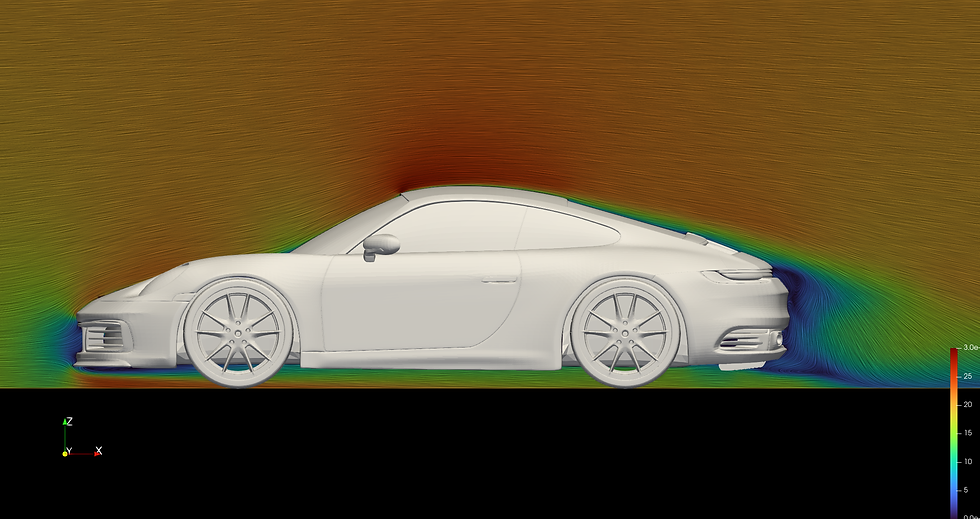
The rear section of the car demonstrated highly efficient airflow management, producing a remarkably small wake behind the vehicle, which contributes to the 911’s low drag coefficient of 0.31. Additional analysis showed excellent side airflow stability, efficient mirror design, and minimal turbulence along the vehicle’s body.
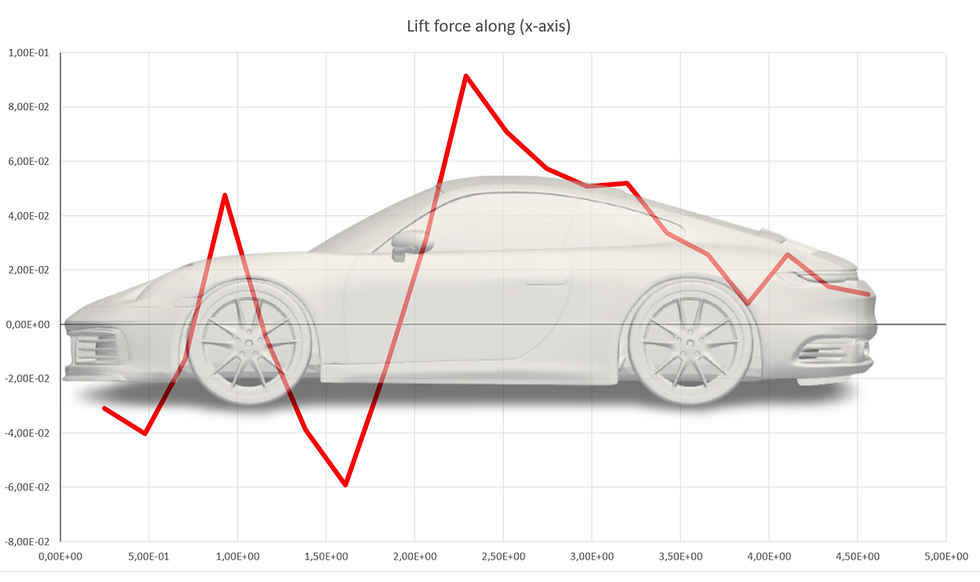
However, the simulations also identified aerodynamic weaknesses. The roof profile generated a significant low-pressure zone, creating positive lift and reducing high-speed stability. Flow separation near the A-pillar region also contributed to unwanted aerodynamic inefficiencies.
Overall, this project demonstrated why the Porsche 911 992 is considered one of the most aerodynamically refined sports cars, combining advanced airflow management, active aero systems, and highly optimized body geometry.